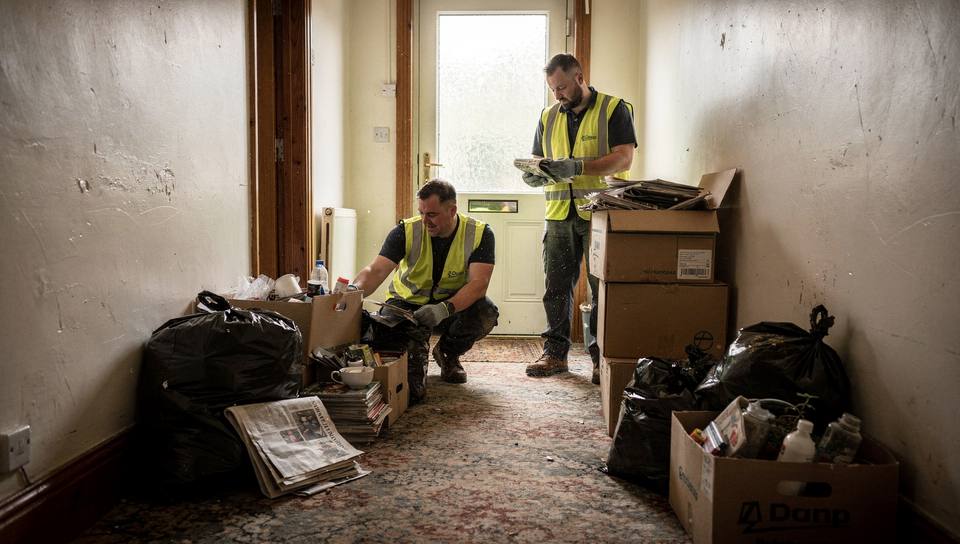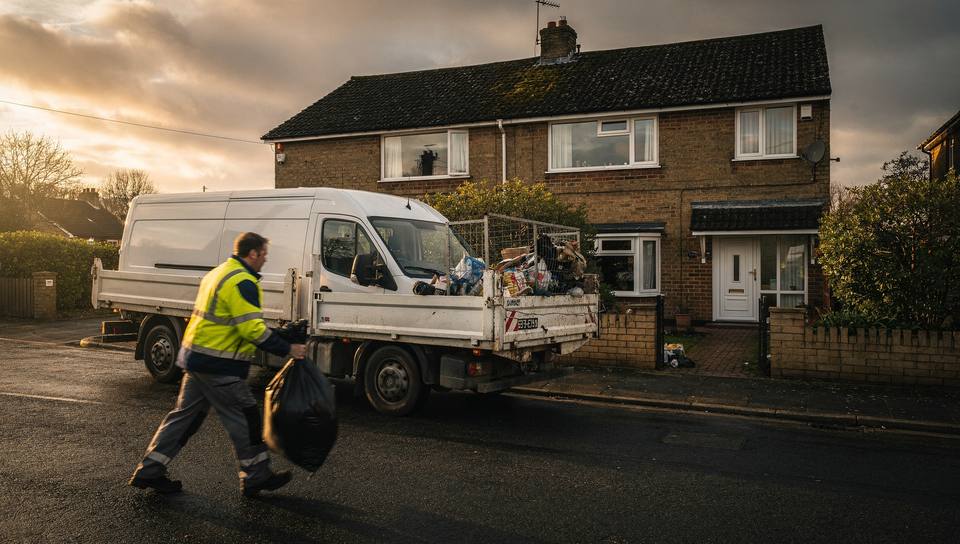
The time depends mainly on how much there is, how easy it is to reach and how many people attend. A small flat or a few rooms is usually planned as part of one day, while a full family home or a heavily cluttered property is often planned over a longer period. Ask the firm for a written estimate.
Key points
- Volume, access, sorting and crew size matter more than the number of bedrooms.
- Firms usually quote after a visit or from photos, and the same information helps them estimate the time.
- Sorting what to keep before the team arrives is the biggest way to save time.
- If you need several days to go through the contents, a skip may suit you better than a clearance crew.
What decides how long a house clearance takes
There is no single answer, and we have not found an official figure for typical clearance times. What we can say is that firms price and plan by the number of van loads, so the time follows the volume. A cost guide from Checkatrade sizes jobs from a quarter van to a full van load, and a whole house often needs more than one.
The same guide notes that a clearance which takes longer to complete can cost more, and that heavy waste is slow to remove. Time and price are closely linked, which is why a firm will usually ask for photos or a visit before it names a day.
- Volume: more van loads means more trips to load, travel and unload.
- Access: stairs, no lift, narrow hallways and long carries slow a team down.
- Parking: if the van cannot stand close to the door, every load takes longer.
- Contents: heavy furniture, a piano, a large wardrobe or full bookcases take more effort than light items.
- Sorting: if items still need to be separated into keep, sell, donate and dispose, the team has to wait or work around you.
- Crew size: a larger crew finishes sooner, though it may cost more per day.
- Condition: a heavily cluttered property takes far longer, because items must be moved carefully to reach each room.
A typical timeline from enquiry to finish
The clearance itself is only one part of the process. A national charity that runs a paid clearance service describes the steps clearly, and most firms follow something similar.
- You contact the firm and describe the property, usually through an online form, a phone call or photos.
- The firm arranges a visit, or works from photos, to see what is there and confirm what it can and cannot take.
- You receive a written quote. If you accept, you agree a date, and some firms ask for payment in advance to secure it.
- The team arrives, loads the van, makes more trips if needed and takes everything to be reused, recycled or disposed of.
- You walk through the property to confirm it is empty, and you keep your receipt.
Some services do not work at weekends, so check this when you book. If you are working to a completion date or a landlord's deadline, give yourself time for the visit and quote as well as the clearance.
Planning around the size of the job
| Type of job | What to expect | What to ask |
|---|---|---|
| A few items or one room | Often a short visit, sometimes within a single van load | Is there a minimum charge, and how soon can you collect? |
| Flat or small house | Usually one or two van loads, planned as one day | How many people will attend, and how many trips? |
| Large family home | Several van loads, so allow for more than one day if access is difficult | Is the job priced as a fixed quote, and what happens if it overruns? |
| Hoarded or very cluttered property | Often slow and careful, with sorting and safety checks | Can you visit first, and will the plan be phased? |
| House with garage, loft or garden | Extra time for each area | Are outbuildings included in the quote? |
For prices to go with those timings, see our guide to house clearance costs. If the property is full of clutter, our guide to clearing a hoarder's house safely and sensitively explains why a slower pace is better.
If the clearance follows a death
When you are clearing the home of someone who has died, the timing may depend on the legal position as well as the firm. GOV.UK explains that the personal representative, meaning the executor or administrator, is legally responsible for the person's money, property and possessions, and that you may need probate before dealing with some assets.
If you are unsure what you are allowed to remove or sell, speak to the solicitor or the person handling the estate before booking a date. It is far easier to wait a few days than to try to recover something that has already been taken away.
How to save time on the day
- Remove anything you want to keep, including papers, photographs, jewellery and sentimental items, before the team arrives.
- Label or set aside items you are donating or selling, and tell the firm which they are.
- Clear access, and book parking or a bay outside the property if you can.
- Disconnect and empty fridges, freezers and washing machines in advance.
- Be on site, or nominate someone who knows what stays and what goes, so the team is not waiting for instructions.
- Check the quote for what is excluded, such as asbestos, gas bottles and fuel, so there are no surprises.
Local examples and same day options
Many firms offer short notice slots for smaller jobs, but a full house is harder to fit in at once. In Glasgow, our ranked firms mostly quote on volume from photos or a visit, which can speed up the first step. See our house clearance ranking for Glasgow. In Cardiff, all of the firms we rank offer free quotes, so you can ask several for dates at once: see house clearance in Cardiff.
If you need something removed quickly, read our guide to same day rubbish removal. The house clearance hub shows the ranked firms in every city we cover.
Quick answers
What does a house clearance involve?
A firm assesses the property, gives a quote, then removes furniture, belongings and rubbish. The team takes items to be reused, recycled or disposed of properly. You should receive a receipt and the firm should be a registered waste carrier.
Do house clearance companies clear everything?
Not always. Many firms will not take hazardous items such as asbestos, gas bottles, fuel, chemicals or medical waste. One national charity also excludes building materials and garden waste. Ask for the exclusions in writing before the day.
Do you get any money for house clearance?
Sometimes. If the contents include furniture, antiques or other items with resale value, some firms deduct their worth from the price. One ranked firm in Newcastle publishes that it offsets valuable items against the cost. Get any credit agreed in writing.
Can I speed up a clearance by sorting beforehand?
Yes. The biggest delays come from sorting during the clearance. Setting aside what you keep, sell and donate means the team can load without waiting, which usually shortens the day and can reduce the cost.
Find a trusted house clearance firm
We rank the five best house clearance companies in 11 UK cities on reviews, licensing and recycling. Nobody pays to be listed. See all house clearance rankings.
Sources
- Checkatrade: House clearance cost guide
- British Heart Foundation: House clearance service
- GOV.UK: Waste duty of care code of practice
- GOV.UK: Dealing with the estate of someone who has died
- Natural Resources Wales: Disposing of your household waste
Prices and council fees quoted from our city rankings were checked on 3 November 2026. Rules can change, so check with your council or the regulator before you act. This guide is general information, not legal advice.