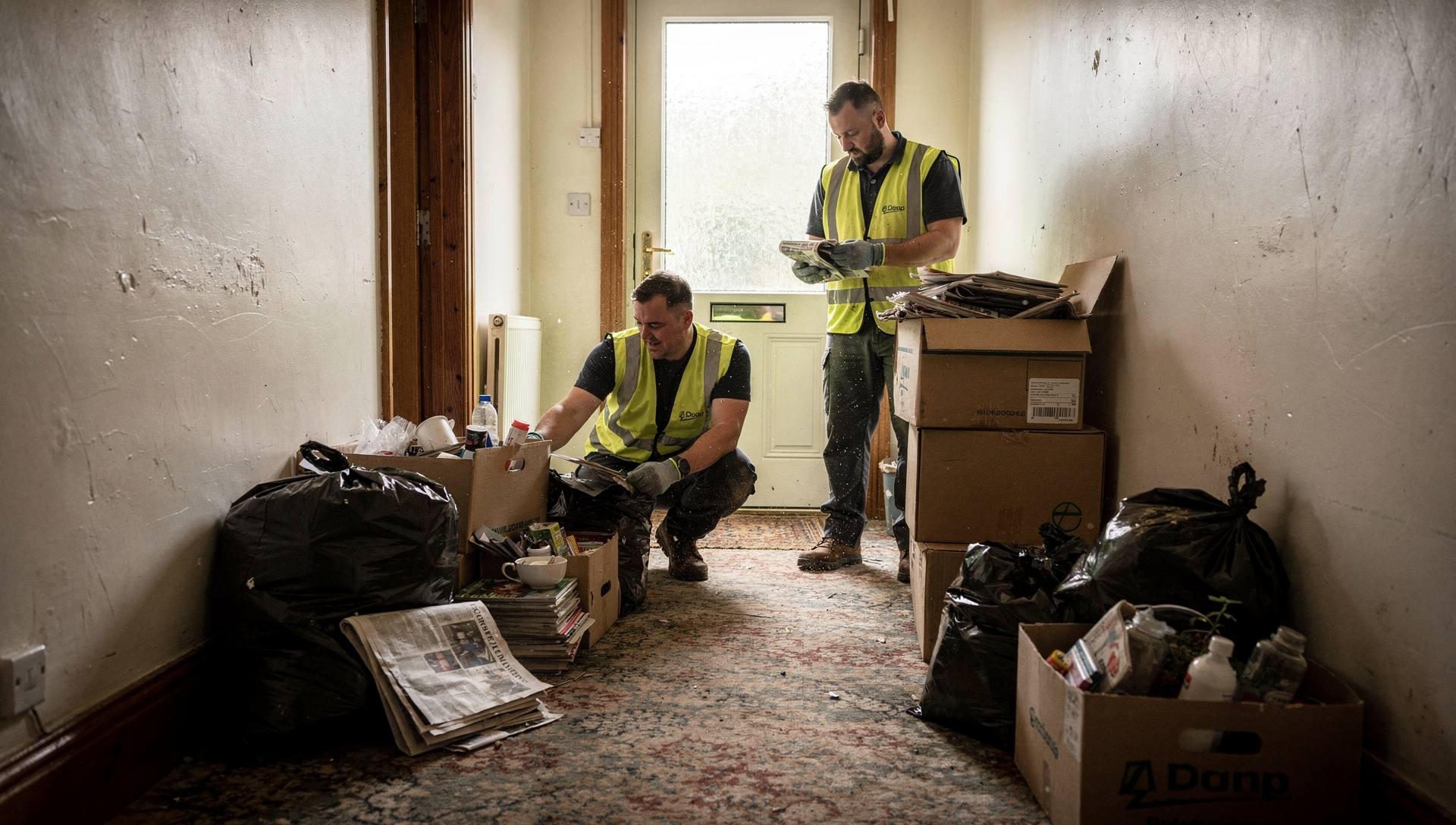
Go slowly, involve the person whose home it is and put safety before speed. Hoarding disorder is a recognised mental health condition, and a surprise or forced clear-out rarely helps. Encourage them to speak to a GP, agree a plan together, then use an experienced, registered clearance firm for the work they have agreed to.
Key points
- Hoarding disorder is a recognised mental health condition, so approach with patience and respect, not blame.
- A clear-out without consent is unlikely to help in the long term, according to Mind.
- Fire safety and clear exits are the first priority.
- A GP is the first step for treatment, and charities and fire services can also help.
- Choose a firm that will visit first, work at your pace and quote in writing.
Start with understanding, not a skip
Hoarding disorder is a mental health condition in which a person collects many items and finds it very hard to discard them, even when it affects daily life. The NHS says the signs can include rooms that can no longer be used because they are too full, strong attachment to belongings, and difficulty with everyday tasks such as cooking and cleaning.
This guide is not a way to judge whether someone has the condition. Only a health professional can do that. What matters here is that the belongings often feel very important to the person, and the NHS notes that many people do not see their situation as a problem, so it is often first noticed by neighbours, friends or relatives.
Mind, the mental health charity, makes a point that is worth remembering: clearing out clutter does not deal with the reasons why it is there. A one-off clear-out, particularly a surprise visit, is unlikely to help long term and can make things worse.
Where to find support
A clearance is much more likely to last when the person is also supported. These are the main routes.
- Their GP: the NHS advises seeing a GP if you think you may have hoarding disorder, or if someone close to you suspects it. A GP can refer to a mental health specialist, and the main treatment is talking therapy, usually cognitive behavioural therapy.
- Mind: the charity publishes information for people who hoard and for family members, and it runs a helpline on 0300 123 3393.
- Your fire and rescue service: some brigades offer tailored safety advice and checks. London Fire Brigade, for example, offers a free Home Fire Safety Checker and can arrange an in-person visit for higher risk homes.
- Your local council: many councils and fire services work with social care teams to support people who may need help, so it is worth asking adult social care what is available.
If you are the person whose home it is, you are not alone, and asking for help is a good first step. Speaking to a GP is a sensible place to start.
Put safety first
The most important risk is fire. London Fire Brigade reports that it attended almost 1,040 hoarding-related fires in a single year, causing around 186 injuries and 10 deaths. It explains that stored items can block escape routes, make fires spread faster and make it harder for crews to reach people.
The brigade also warns that portable heaters, candles and stoves placed close to stored items raise the risk, and that possessions can create trip hazards. Soaked items can add weight and raise the risk of building collapse.
- Keep a clear route from the bedroom to the front door.
- Keep heaters, candles and cookers well away from stored items.
- Check that smoke alarms are fitted and working.
- Clear the stairs, landings and hallways first.
- Make sure emergency services could reach every room.
How to plan a sensitive clearance
The person should stay in charge of decisions about their belongings wherever possible. Mind advises involving them in decisions, avoiding words such as junk or rubbish, and acting without their consent only where there is a serious safety risk.
- Talk first, and listen. Ask what would feel manageable and what worries them most.
- Agree a small first goal, such as clearing a route to the door or one room.
- Set up categories together: keep, donate, sell, recycle and dispose.
- Work in short sessions, and expect progress to be slow. Mind notes that discarding often happens over months or years.
- Keep paperwork, photographs, medication and valuables aside to be checked before anything is removed.
- Celebrate small steps, and accept that the person may change their mind about an item.
- Only then bring in a clearance firm for the items that have been agreed.
If the property is full of belongings that must be sorted carefully, a skip left on site over several days can sometimes suit the pace better than a single visit. Our guide to how long a house clearance takes explains how timing works.
Working with a clearance firm
Ask any firm to visit the property before quoting, because photos rarely show the full picture. A firm that respects the person's wishes will talk to them directly and be willing to work in stages. In our city rankings, firms in places such as Glasgow and Manchester usually quote on volume from photos or a visit, so ask whether a visit is possible. See the Glasgow house clearance ranking and the Manchester house clearance ranking.
- Ask whether they have experience with heavily cluttered homes.
- Ask for a phased plan and agree what happens if you need to pause.
- Agree how personal items, papers and valuables will be set aside.
- Ask for a fixed written quote that states what is included.
- Check the firm is a registered waste carrier. In England and Wales, a private firm needs an upper tier registration, and in Scotland the register is kept by SEPA.
- Ask where the waste will be taken, and keep a receipt.
You have a legal duty to pass waste only to an authorised person, so these checks matter. Our house clearance hub lists ranked firms by city. If the person has valuables or sentimental items, our guide to whether a clearance company pays for valuables explains how to protect them.
What it costs
We could not find a reliable published national figure for clearing a hoarded home. A cost guide from Checkatrade states that hoarder properties cost significantly more than a standard clearance, because of the volume and the time involved. Each job is different, which is why a visit and a written quote matter.
For general price ranges and what affects them, see our guide to house clearance costs. Charities may collect good furniture free, and some local councils may be able to point you to support, so ask before assuming you must pay for everything.
Quick answers
How much does it cost to clear a hoarder's house in the UK?
There is no reliable national figure. A cost guide from Checkatrade says hoarder properties cost significantly more than a standard clearance because of the volume and time involved. Ask for a written quote after a visit, and agree what is included.
Can you get free house clearance?
A full free clearance is unusual. Some charities collect good quality, saleable furniture free, and a firm may offset valuable items against the price. A heavily cluttered home usually needs a paid service.
Do house clearances pay you?
Occasionally. A firm may credit the value of items that can be resold, but you should not expect payment. In a hoarded home the volume of items to be removed usually outweighs any value. Agree any credit in writing.
What if the person does not want help?
You cannot force change, and persuading, tricking or threatening someone can cause them to withdraw, according to Mind. Be patient, keep the door open, encourage them to see a GP and look after your own wellbeing too.
Find a trusted house clearance firm
We rank the five best house clearance companies in 11 UK cities on reviews, licensing and recycling. Nobody pays to be listed. See all house clearance rankings.
Sources
- NHS: Hoarding disorder
- Mind: How to help someone who hoards
- London Fire Brigade: Support for people with hoarding tendencies
- Checkatrade: House clearance cost guide
- GOV.UK: Waste duty of care code of practice
- SEPA: Duty of care
Prices and council fees quoted from our city rankings were checked on 3 November 2026. Rules can change, so check with your council or the regulator before you act. This guide is general information, not legal advice.