Sometimes. Some house clearance firms buy valuable items or deduct their worth from your bill, but many simply charge for removal and quote by volume. Never assume you will be paid. Get valuable items assessed first, check you have the legal right to sell them, and agree any credit in writing before the work starts.
Key points
- Payment for valuables is a bonus, not a guarantee, and some firms offer none.
- A written offset on the quote is safer than a verbal promise on the day.
- Get jewellery, art and antiques valued independently before the clearance.
- If the home belongs to an estate, check with the executor or a solicitor before selling or giving anything away.
- Charities may collect good furniture free, which can be better than selling it cheaply.
Do house clearance companies pay for valuables?
Some do, but it is not standard. Most firms quote on the volume and weight of what they remove, and the price covers labour, fuel and disposal. If the contents include furniture, antiques or other items that can be resold, certain firms will reduce the price to reflect that.
In our city research, checked on 3 November 2026, one ranked firm in Newcastle publishes that it offsets valuable items against the cost. See our Newcastle house clearance ranking. In most other cities, firms in our top 5 quote after a visit or from photos and do not publish how they treat valuables, so you need to ask.
It helps to think of it as a trade. The firm will only credit what it can realistically resell, and it has to cover its own costs. A heavy, dated wardrobe rarely has resale value. A small collection of silver, good jewellery or a sought-after piece of furniture may.
Check who has the right to sell first
Before anything is sold or removed, you need to be sure it is yours to deal with. If the home belongs to someone who has died, GOV.UK explains that the personal representative, meaning the executor or administrator, is legally responsible for the money, property and possessions, and that you may need probate before dealing with some assets.
In Scotland the equivalent legal authority is called confirmation. Citizens Advice Scotland describes it as the authority that allows an executor to collect and distribute assets, and it advises speaking to a solicitor before selling or giving away anything. The rules differ across the UK, so check the position for your situation.
- Do not sell or give away anything until you know who is entitled to it.
- Keep a list of what is in the property, with photographs, before work begins.
- Tell the home insurer if the property is empty and holds valuable items.
- If there is a dispute between relatives, agree in writing what can be removed and by whom.
How to get valuables assessed before the clearance
Do not rely on a quick glance from the clearance crew. Their job is to quote for removal, and their eye may be for the items they can sell quickly. An independent opinion costs little compared with what you could lose.
Citizens Advice Scotland suggests using an auctioneer for valuable items such as jewellery, paintings or antiques, and checking whether any items are named in insurance policies, as these may carry specific valuations. The same sensible approach applies in England and Wales.
- Search the whole property, including drawers, coats, loft boxes and the garage, for jewellery, coins, watches, medals, paperwork and cash.
- Check insurance documents and old receipts for items that have been valued before.
- Photograph anything that looks unusual, old or well made, and note any marks or makers' names.
- Ask a local auctioneer or a specialist valuer for an opinion on the best items.
- Separate the valuable pieces from the main clearance, so they are not removed by mistake.
Remember that papers, photographs and personal documents can matter as much as objects. Keep them aside and go through them before you discard anything.
Common mistakes to avoid
The most common problem is a verbal promise that is never repeated in writing. The second is clearing in a hurry, so that cash, jewellery or documents are thrown out with the rubbish. If the property is very full, a slower approach is safer, and our guide to how long a house clearance takes explains how to plan the time.
Also be wary of anyone who offers cash for the whole contents without looking at them, or who asks you to leave before they have finished. A genuine firm will be happy to put its offer and its carrier registration details in writing.
What happens to the items after they are removed
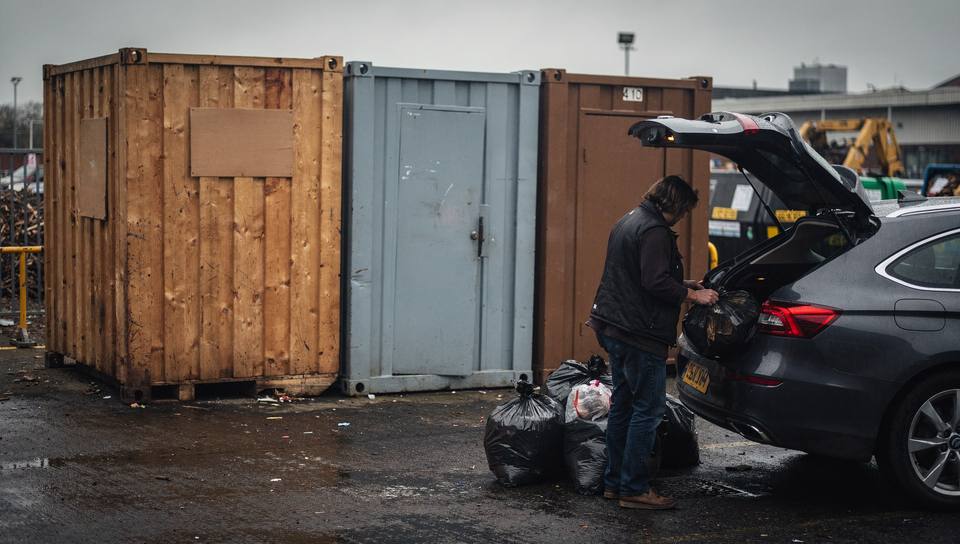
A reputable firm will reuse, recycle or dispose of the contents lawfully. Some items are sold on, some are broken down for recycling, and the remainder goes to authorised disposal sites. You have a duty of care to pass your waste only to an authorised person, so the firm should be a registered waste carrier. The upper tier registration number usually begins with CBDU in England and Wales, and in Scotland the register is kept by SEPA.
Charities offer another route. A national charity says that if you only have a few saleable items, a free home collection may be available. Locally, Emmaus Leeds offers a free collection of reusable furniture, Emmaus Glasgow collects good quality, saleable furniture free of charge, and in Bristol both Emmaus and St Peter's Hospice offer free furniture collections. Our guide to free rubbish disposal covers more options, and the Leeds house clearance ranking shows the services available there.
How to agree payment or credit safely
The safest approach is to get any credit onto the written quote. A promise made on the doorstep is hard to enforce afterwards, and a firm that offers a high figure on the phone may reduce it once it sees the items.
- Ask whether the firm buys items or offsets them against the price.
- Ask for the offset to be listed on the quote, item by item where possible.
- Compare at least two or three quotes, as offers can vary widely.
- Keep your own list, so you can check that nothing has been taken that you wanted to keep.
- Pay by card where possible, and keep the receipt and the firm's registration number.
For the overall cost, see our guide to how much a house clearance costs. Our house clearance hub links to every city ranking.
Quick answers
Do you get any money for house clearance?
Sometimes. Some firms buy valuable items or deduct their worth from the bill, but many only charge for removal. Ask before you book, and have any offer written on the quote.
Do house clearances pay you?
Not as a rule. Payment depends on whether the contents have resale value and whether the firm buys items. Do not expect a cheque unless it is agreed in writing in advance.
What do house clearance people do with the stuff?
Reusable items may be sold or donated, recyclable material is sent for recycling and the remainder goes to authorised disposal sites. The firm should be a registered waste carrier, and you should ask where your waste will be taken.
Do house clearance companies clear everything?
Not always. Many firms refuse hazardous items such as asbestos, gas bottles, fuel and chemicals. One national charity also excludes building materials and garden waste. Ask for the exclusions in writing.
Find a trusted house clearance firm
We rank the five best house clearance companies in 11 UK cities on reviews, licensing and recycling. Nobody pays to be listed. See all house clearance rankings.
Sources
- GOV.UK: Dealing with the estate of someone who has died
- Citizens Advice Scotland: Dealing with the financial affairs of someone who has died
- GOV.UK: Waste duty of care code of practice
- SEPA: Duty of care
- British Heart Foundation: House clearance service
Prices and council fees quoted from our city rankings were checked on 3 November 2026. Rules can change, so check with your council or the regulator before you act. This guide is general information, not legal advice.