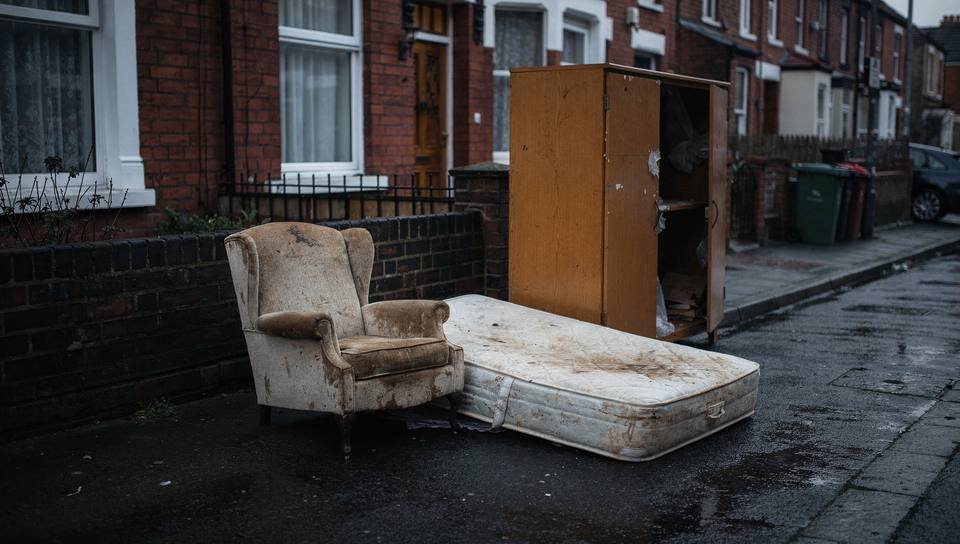
You can often get rid of household rubbish for free by taking it to a council recycling centre, using a free council collection allowance, giving usable items to a charity or a reuse group such as Freegle, or returning old electricals to a shop when you buy a new item. What is free depends on your council and the item.
Key points
- Household waste recycling centres are free for household waste, but vans and trailers often need a permit.
- Some councils give a free bulky collection each year, including Manchester, Leeds and Liverpool.
- Reuse groups and charities will take usable furniture and household goods.
- Retailers must take back old electricals when you buy a similar new item.
- Never hand waste to an unregistered collector just because the offer is free.
Take it to your local recycling centre
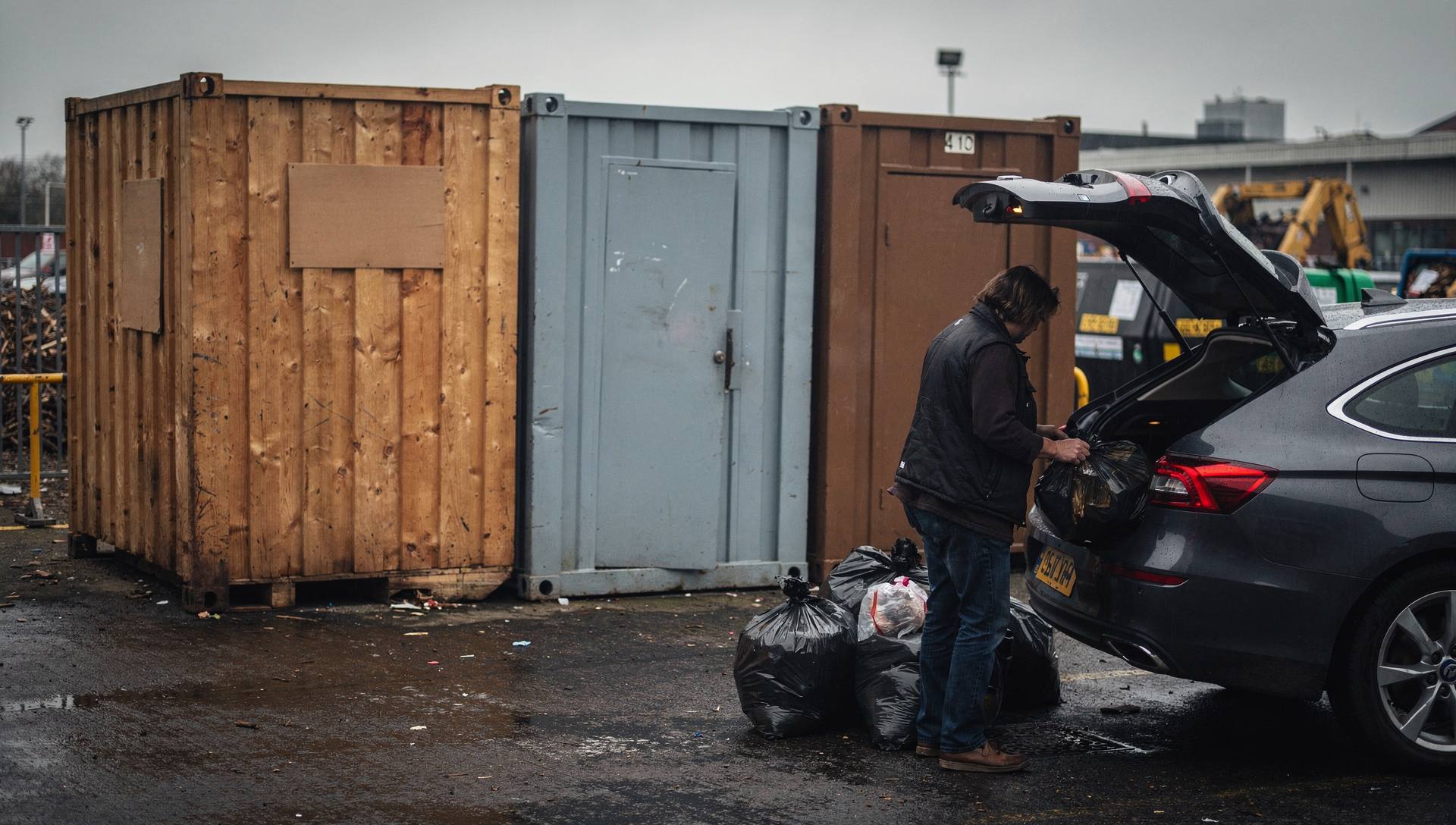
Household waste recycling centres, often called the tip, are the most common free option. They accept household waste from residents, and many take furniture, electricals, cardboard, garden waste and metal. Rules differ by council, so check what your local site accepts before you load the car.
Vans, pick-ups and trailers are often restricted. In Leeds, a permit is needed for larger vehicles and trailers, and a standard set gives 12 permits per year. In Sheffield, a yearly permit covers 12 visits to one site, and a one-off permit is available for events such as a house move. In Bristol, a permit is needed for a van, pick-up or trailer over 1.52 m high, and it allows 12 visits in 12 months.
These permits are for household waste only. Leeds City Council states that trade waste, including waste from tradespeople working in homes, is not allowed, and it warns of serious penalties for breaches. If you are clearing a rented property as a landlord, or removing waste from a job, you will need a different route.
Use a free council collection allowance
Some councils include free bulky waste collections. These are worth checking before you pay anyone.
- Manchester: one free collection of up to three large items per household each year (April to March).
- Leeds: one free collection of up to five items per financial year, then £30 per collection.
- Liverpool: up to five bulky items, five small electricals and five bags of textiles collected free of charge, but the service is not for full house clearances.
- Edinburgh: bulky uplifts cost £5 per item, but the service is free for households on Council Tax Reduction.
Other councils charge, but the cost can still be low. Glasgow charges £5 per standard item, and Newcastle charges £10 per large item. Our guide to booking a council bulky waste collection explains how the booking process usually works, and our Manchester and Leeds pages show the local firms if you need more than the council can take.
Give usable items away
If an item still works or is in good condition, someone will usually want it. Freegle is a registered charity with a local network where people give and request items, and it is completely free. You list the item, someone local replies, and they collect it.
Charities also collect furniture without charge. Emmaus Leeds offers a free collection of reusable furniture, Emmaus Glasgow collects good quality saleable furniture free of charge, and in Bristol both Emmaus and St Peter's Hospice offer free furniture collections. Edinburgh Furniture Initiative, run by Four Square, accepts most undamaged donated furniture.
Charities generally need items to be clean, safe and saleable, so broken or heavily worn furniture is more likely to be refused. Ask what they accept before you book.
Return old electricals to the shop
Old electrical items should not go in general rubbish. Under the rules set out by GOV.UK, retailers must offer to take back waste of the same type as the item you buy, and also items with the same function. In-store take-back must be free, and customers must have at least 28 days to bring the old item back.
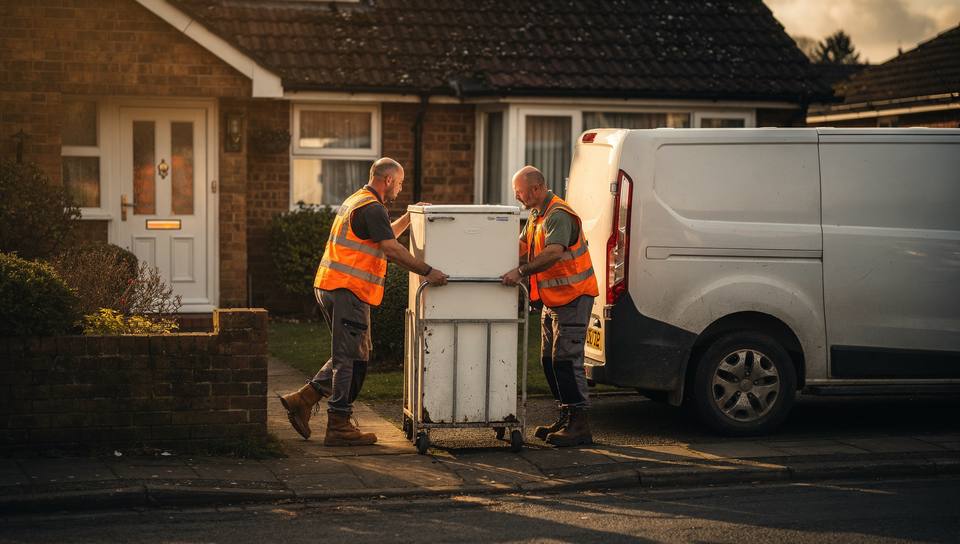
If you are buying a new fridge, washing machine or television, ask the retailer to remove the old one at the same time. A charge may apply for collection from your home, because the retailer can charge to cover transport costs.
Larger electrical retailers (with electrical sales areas over 400 square metres) must also take back very small electricals, meaning items under 25cm on their longest side, free for everyone, whether or not they buy anything. Our guide to fridge and freezer disposal covers the larger appliances in more detail.
What about bedding and other soft items?
Rules for general waste bins differ by council, so check your own collection rules before putting anything in a black bin. Usable bedding may be accepted elsewhere. For example, Wandsworth Council points residents to Battersea Cats and Dogs Home, which accepts bedding but not items stuffed with feathers, and to local charity shops that take bedding donations.
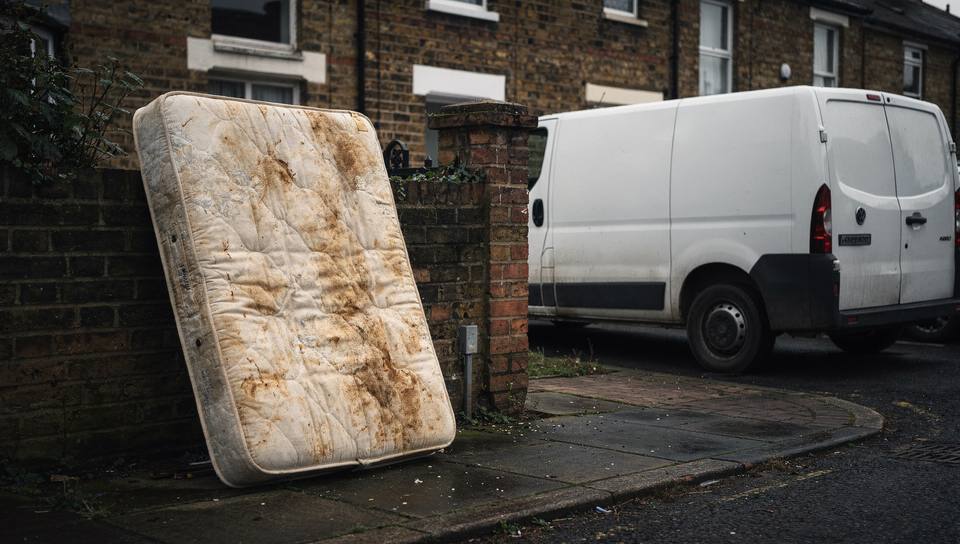
Mattresses are bulkier. Some councils collect them as bulky items, and Cardiff lists memory foam and spring mattresses among the items it accepts. See our mattress disposal guide for the full options.
Be careful with 'free' collection offers
A free offer is only safe if the person taking your waste is legally allowed to. You have a duty of care for household waste, and in England, if your waste is fly-tipped and you have not met that duty, your council can issue a fixed penalty of up to £600 (GOV.UK guidance). GOV.UK also advises people to ask where waste will end up, avoid paying cash, ask for a receipt and note the vehicle details.
- Ask if the collector is a registered waste carrier.
- Check the registration on the public register (Environment Agency in England, SEPA in Scotland, Natural Resources Wales in Wales).
- Ask where the waste will go.
- Keep a record of the vehicle and any receipt.
If you cannot find a free route, a paid clearance may be the safest option. Our rubbish removal cost guide shows published prices, and our junk clearance hub links to every city ranking.
Quick answers
What is the cheapest way to get rid of junk for free?
Usually it is a mix of a free reuse offer for good items, a council recycling centre for the rest, and a free council collection allowance if your council offers one.
How do I get rid of a large amount of rubbish?
For a large amount, a recycling centre may need several trips and a van permit. A skip or a registered man and van is often more practical, and our guide to man and van versus skip compares the two.
How do I get rid of rubbish for free?
Take household waste to a recycling centre, use a free council collection, donate items to a charity or reuse group, or ask a retailer to take back old electricals.
Can I put an old duvet in my black bin?
It depends on your council, so check its rules. A clean, usable duvet may be better donated, though some charities will not accept feather-filled items.
Is it safe to let someone take rubbish for free?
Only if they are a registered waste carrier. If your waste is fly-tipped and you did not check, your council could issue a fixed penalty of up to £600 in England.
Find a trusted waste firm near you
Our city pages bring together the best skip hire, house, junk, office and garage clearance firms in 11 UK cities. Nobody pays to be listed.
Sources
- Leeds City Council: Permit scheme for waste recycling centres
- Sheffield City Council: Van and trailer permit
- Bristol City Council: Household waste recycling centres permit scheme
- GOV.UK: Electrical waste, retailer and distributor responsibilities
- Freegle
- Wandsworth Council: Bedding
- GOV.UK: Yorkshire households urged not to become accidental waste criminals
- GOV.UK: Household waste duty of care fixed penalty notice guidance
Prices and council fees quoted from our city rankings were checked on 3 November 2026. Rules can change, so check with your council or the regulator before you act. This guide is general information, not legal advice.