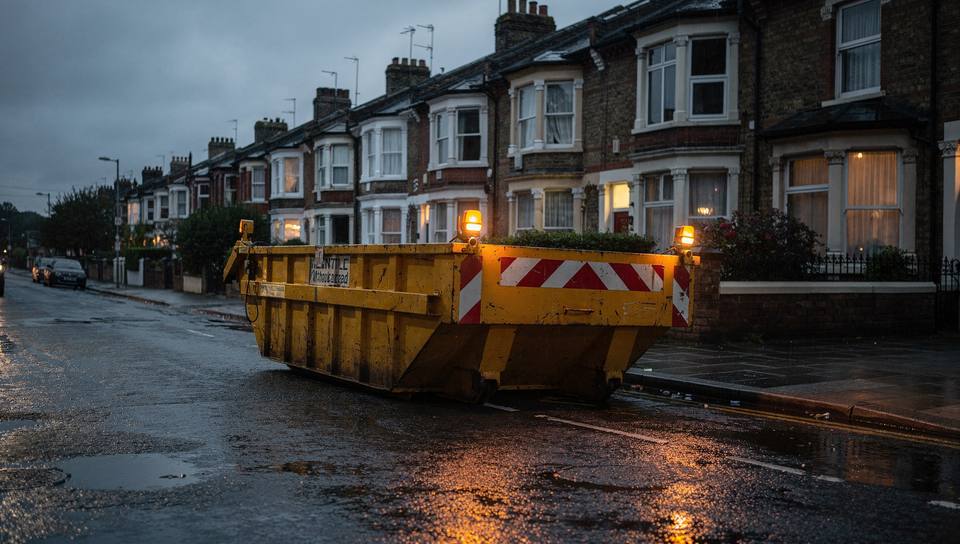
Most home projects need a skip of 2 to 8 cubic yards. A 2 to 3 yard mini skip suits a small garden job or one room, a 4 to 5 yard midi suits a bathroom or kitchen strip out, and a 6 to 8 yard builders skip suits larger refurbishments. If you are torn between two sizes, ask the firm which it advises, because overfilled skips are not collected.
Key points
- Skip sizes are measured in cubic yards, which is volume, not weight.
- Domestic jobs usually need between 2 and 8 yards; larger skips are mainly for commercial work.
- Heavy waste such as soil and rubble needs a smaller skip, because weight limits are reached long before the skip is full.
- A bigger skip costs only a little more than a smaller one, but it needs more space and may need a road permit.
- Never overfill a skip. The firm can refuse to collect it until the load is made safe.
Skip sizes at a glance
Skip hire firms sell skips by volume, in cubic yards. One cubic yard is a little under one cubic metre, so a 4 yard skip holds roughly 3 cubic metres of waste. The easiest way to picture a size is in bin bags, which is how most guides compare them.
| Skip size | Name | Approximate capacity | Typical project |
|---|---|---|---|
| 2 to 3 yard | Mini | 20 to 30 bin bags | Small garden tidy, single room declutter, small DIY job |
| 4 to 5 yard | Midi | 30 to 50 bin bags | Bathroom refit, kitchen clear out, loft or garage clearance |
| 6 yard | Builders | 50 to 60 bin bags | Kitchen refurbishment, medium home project |
| 8 yard | Builders | 70 to 80 bin bags | Larger home improvements, many house clearances |
| 10 to 12 yard | Maxi | 90 to 120 bin bags | Full house clearance or whole house renovation |
Skips larger than 12 yards, up to 35 yards, are normally for commercial and construction sites. For a house, a flat or a garden, you will almost always be choosing between a mini, a midi and a builders skip.
How to work out which size you need
You do not need to be exact. A rough estimate is enough to choose between neighbouring sizes. Follow these steps before you phone.
- List everything that is going: furniture, fittings, flooring, garden waste, rubble. Include items you are unsure about.
- Picture each item in bin bags. A kitchen base unit is a few bags, a double wardrobe is several, and a bathroom suite is a handful.
- Add the bags up, then check the total against the table above.
- Separate heavy waste (soil, brick, concrete, tiles) from light waste (furniture, packaging, carpet). Heavy waste changes the answer, as explained below.
- Allow some spare room for things you find once the job starts, then ask the firm to confirm the size you have chosen.
If your total lands between two sizes, ask the firm which it prefers. A skip that is level-full is fine, but one that is piled high is not safe to lift, and an unsafe skip will not be collected until the load is reduced. Some councils write this into their own skip terms, saying a skip will not be collected if it is overloaded and that an abortive call charge can follow.
Yards are volume, tonnes are weight
A common mix-up is thinking a 4 yard skip is the same as a 4 tonne skip. It is not. A yard measures how much space the skip has, while a tonne measures how much the load weighs. A skip can be full by volume but well under its weight limit, or well under full by volume and already too heavy to lift.
This matters most for soil, rubble, brick and concrete. One trade guide estimates that a tonne of soil fills only 6 to 8 bin bags, which means a 6 yard skip with a 3 tonne limit would reach its weight limit after roughly 18 to 24 bags of soil. Weight limits differ between firms, so always ask for yours.
In practice, heavy waste goes in a smaller skip, filled only part of the way, or in a dedicated skip for inert waste. Some councils that supply skips set the same rule for their larger maxi skips, asking customers not to fill them more than three quarters full with brick, rubble or soil. Mixed light waste can use a bigger skip. If you have both, tell the firm so it can advise on one skip or two.
Matching the skip to your project
- Single room declutter or small garden job: a mini skip is usually enough.
- Bathroom refit or small loft or garage clearance: a midi skip of 4 to 5 yards.
- Kitchen refurbishment: around 6 yards, depending on how much you are taking out.
- Landscaping with turf and green waste: 4 to 8 yards. With heavy soil, stay at 6 yards or below and ask about weight.
- House clearance: commonly 8 to 12 yards, depending on the size of the property.
- Full house renovation: 12 yards or more, or several skips over the course of the job.
If you are clearing a whole property rather than carrying out building work, a skip is not always the cheapest route. Our guide on whether a man and van is cheaper than a skip compares the two for typical loads.
Size, space and permits
A larger skip needs more room and a stronger surface. If you have a driveway, the skip can usually go there without a permit. If it has to sit on the road, you will need your council's permission, and one guide notes that an 8 yard skip is typically the largest size allowed on the highway. Our guide to the skip permit rules explains who applies and what it costs.
Measure the space before you book. Allow room for the delivery lorry to reach the spot and for the skip to be lifted back out, and keep the area free of cars and bins. Some councils ask for at least three metres of clear access.
Finally, check what you plan to load. Skips cannot take everything, and a wrongly loaded skip can bring extra charges. Our guide on what can and cannot go in a skip covers the main exclusions.
What skips cost by size
Prices vary by city, by firm and by how long you keep the skip. One trade directory puts average weekly hire at about £125 for a mini skip, £225 for a midi and £320 for a builders skip, though it describes these as ballpark averages. Your own quote may differ, so always ask for a written price that includes VAT, delivery, collection and any permit.
Our city rankings show the same pattern. In Manchester, one ranked firm publishes £180 for a 2 yard skip, £230 for a 4 yard and £310 for an 8 yard, all including VAT; see the Manchester skip hire ranking. In Edinburgh, one ranked firm publishes prices from £150 plus VAT for a 2 yard skip up to £375 plus VAT for 16 yards, including delivery and collection; see the Edinburgh skip hire ranking.
Notice that going from 4 yards to 8 yards in Manchester adds £80, which is far less than double. Where space allows, the larger skip is often better value than hiring a second small skip later. You can compare more firms on the skip hire hub.
Quick answers
How do I calculate what size skip I need?
List what is going, convert it into bin bags, and match the total to a size: about 20 to 30 bags for a mini, 30 to 50 for a midi, 50 to 60 for a 6 yard and 70 to 80 for an 8 yard. Treat heavy waste separately, because weight can be the limit before the skip is full. Ask the firm to confirm your choice.
What size skip will fit a 3 seater sofa?
We could not find a reliable published measurement, so the safest approach is to measure the sofa and ask the firm. Sofas are bulky rather than heavy, so they use up volume quickly. Also check the firm's rules, as some skip providers do not allow foam upholstered furniture in their skips.
Is a 4 yard skip the same as a 4 tonne skip?
No. Yards measure volume and tonnes measure weight. A 4 yard skip holds roughly 3 cubic metres, but the weight it can carry depends on the firm's limit. Ask for that limit, especially if you are loading soil, rubble or concrete.
What is the most popular skip size?
We could not verify a reliable national figure. What we can say is that domestic jobs normally use skips of up to 8 yards, with mini and midi sizes suiting smaller projects and 6 to 8 yard builders skips suiting bigger refurbishments.
Find a trusted skip hire firm
We rank the five best skip hire companies in 11 UK cities on reviews, licensing and recycling. Nobody pays to be listed. See all skip hire rankings.
Sources
- Checkatrade: What size skip should I hire?
- MyBuilder: Skip sizes guide
- Huntingdonshire District Council: Skip hire terms and conditions
- Highways Act 1980, section 139 (legislation.gov.uk)
Prices and council fees quoted from our city rankings were checked on 3 November 2026. Rules can change, so check with your council or the regulator before you act. This guide is general information, not legal advice.