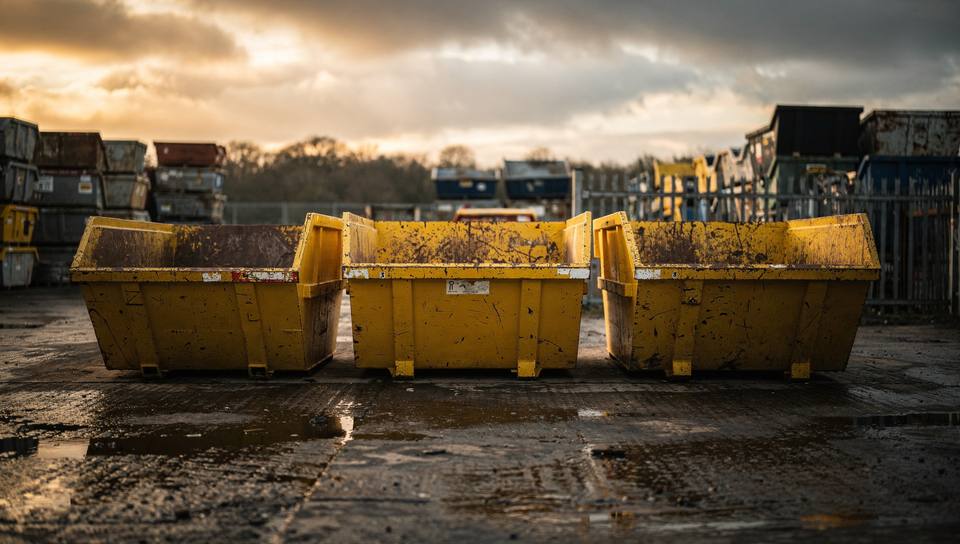
Most household and building waste can go in a skip: furniture, timber, carpets, garden waste, bricks and rubble. You cannot put in asbestos, liquids such as paint and oil, gas cylinders, tyres, clinical waste or fridges and freezers. Mattresses, plasterboard, sofas and batteries are often restricted or charged extra, so always check with your hire firm.
Key points
- Everyday household clutter, timber, garden waste, rubble and old fittings are normally fine.
- Hazardous items such as asbestos, solvents, paint, oil, gas bottles and clinical waste must not go in a skip.
- Fridges and freezers contain ozone depleting substances and are normally banned.
- Mattresses, plasterboard, sofas, batteries and tyres are often charged extra or refused, and rules vary by firm.
- If a banned item is found, you can be charged for handling and disposal, and the skip may not be collected.
What you can normally put in a skip
A skip is designed for general household, garden and building waste. If you are redecorating, clearing a garage or having a kitchen replaced, most of what comes out will be accepted. Typical items include:
- Furniture such as tables, chairs, wardrobes and shelving, subject to the points on upholstery below.
- Timber, doors, flooring, kitchen units and worktops.
- Carpet, underlay and household clutter.
- Garden waste such as branches, turf, hedge trimmings and old fencing.
- Bricks, tiles, concrete and other rubble, within the weight limit.
- Cardboard, packaging and general household rubbish.
Heavy materials such as soil and rubble are accepted, but they are limited by weight, not volume. One council that supplies skips asks customers not to fill larger skips more than three quarters full with brick, rubble or soil. Our guide to choosing the right skip size explains how to allow for this.
What you cannot put in a skip
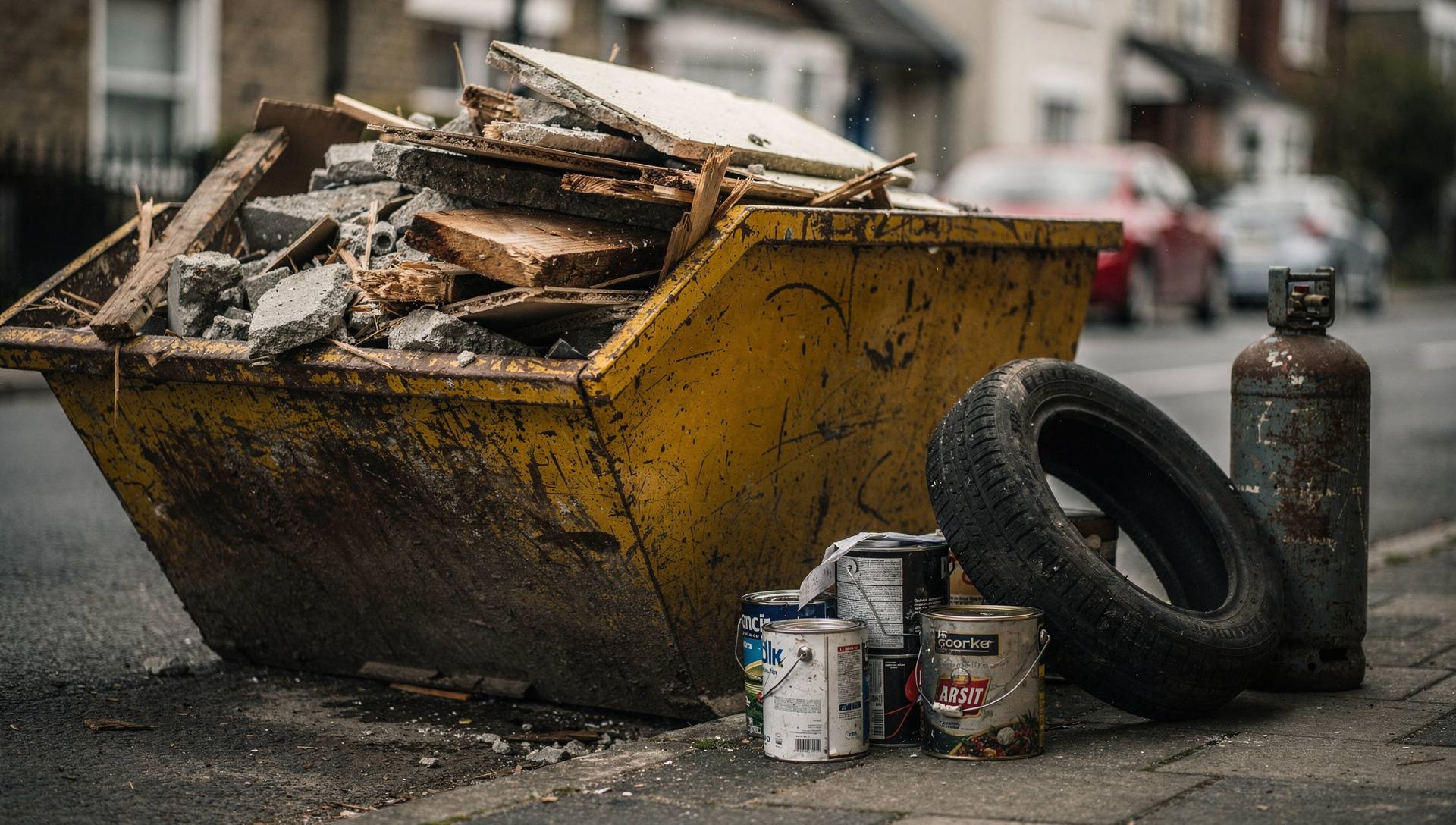
Skip firms are not allowed to take hazardous waste in a standard skip, and they do not want it, because it can contaminate a whole load. GOV.UK describes waste as generally hazardous when it is harmful to humans or the environment, and its examples include asbestos, chemicals, batteries, solvents, pesticides, non edible oils and appliances containing ozone depleting substances, such as fridges.
In practice, the following are banned by almost every provider. The list below is drawn from one council's skip hire terms and a trade guide, and the two agree on the main points.
| Item | Why it is banned | Where it should go |
|---|---|---|
| Asbestos | Dangerous fibres; needs a licensed disposal site | Your council, which can advise on local facilities |
| Paint, solvents, oil, petrol and other liquids | Hazardous and a spill risk | Your council, which may accept some at household recycling centres |
| Gas bottles and fire extinguishers | Pressurised, so a fire and explosion risk | Ask the gas supplier or your council |
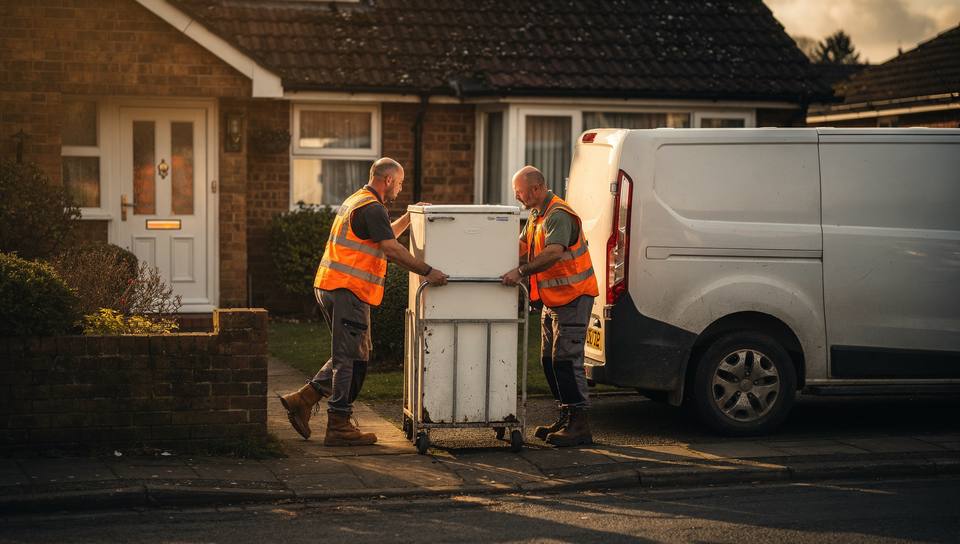
| Fridges and freezers | Contain ozone depleting substances | Retailer take back, council collection or recycling centre |
| Tyres | Banned by most firms and charged separately | Ask your council |
| Clinical and medical waste, medicines | Infectious or hazardous | Ask your council or health provider |
| Animal carcasses and raw meat | Health risk and nuisance | Ask your council |
Asbestos deserves special mention. The Health and Safety Executive states that asbestos waste should only be handled by a licensed disposal site, and that householders' asbestos materials must not be mixed with normal household waste. Contact your council before you disturb anything you suspect contains asbestos.
Items that are often restricted or charged extra
Some items sit in a grey area. They are not hazardous in the same way, but firms may refuse them, charge extra or ask for notice.
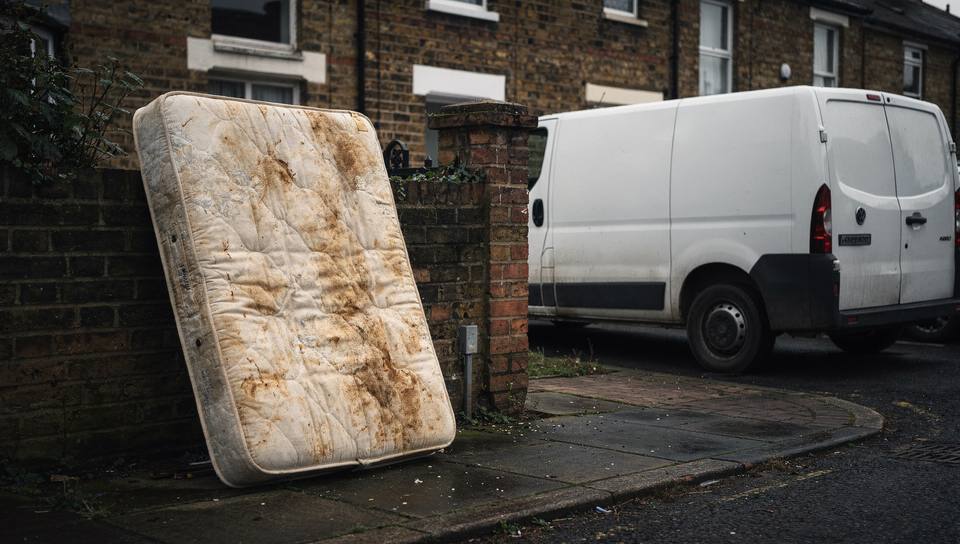
- Mattresses: many firms charge per item or ban them, as they must be handled separately. Read our guide on how to get rid of an old mattress for alternatives.
- Plasterboard: usually must be kept separate from other waste. One council allows a skip of only plasterboard if it is declared at booking.
- Sofas and foam upholstered furniture: banned by some skip providers, including the council terms we reviewed.
- Batteries: accepted only with prior notice by some firms, and not in quantity.
- Electrical items: most electrical items are not taken in a general skip and should be recycled.
In London, none of our ranked skip firms publish a full price list, so we advise asking for a written quote that includes VAT, the permit and any charges for items such as mattresses or tyres. You can compare firms on the London skip hire ranking and see where to start on the skip hire hub.
What happens if a banned item ends up in your skip
Check the terms before you book. One council's skip terms say the customer will be charged directly for extra costs of handling, treating or storing prohibited waste. Others say the skip will not be collected until the item is removed, and that the hirer is responsible for the skip and its contents while it is on site, including fire damage.
There is also a safety side. Gas cylinders, paint and chemicals can start fires or react with other waste, and a skip is often left unattended overnight. For that reason you should never hide a banned item at the bottom of the skip.
Finally, keep your skip for your own use. Other people sometimes try to add their waste to a skip left on the road. If this happens, you could end up responsible for what is inside, so a cover or a note to the firm is worth considering. Our guide to the skip permit rules covers the road side of this.
Where to take the items a skip will not accept
- Phone your council or check its website for the household waste recycling centre nearest to you, and read its list of accepted items.
- For fridges and freezers, use retailer take back, a council collection or a recycling centre. See our guide on how to dispose of an old fridge or freezer.
- For paint, oil and solvents, use the hazardous waste service your council provides. Councils will not collect these in weekly bin or bulky waste collections, though some accept them at household recycling centres.
- For a few large unwanted items, a council bulky waste collection can be cheaper than adding a skip. Glasgow charges £5 for a standard item, £25 for a white goods item, and Manchester gives each household one free collection of up to three large items a year.
- For a mixed load that includes banned items, a rubbish clearance service may handle the lot. Compare options in our junk clearance rankings.
Quick answers
What should you not put in a skip?
Do not put in asbestos, paint and other liquids, solvents, oil, petrol, gas bottles, fire extinguishers, tyres, clinical waste or fridges and freezers. Take extra care with mattresses, plasterboard, sofas and batteries, which many firms restrict or charge for. Always check your own firm's list.
Can you fill a skip with anything?
No. A skip is for general household, garden and building waste. Hazardous items are banned, heavy waste is limited by weight, and loads must not be piled above the sides, otherwise the skip may not be collected.
Can I put old tins of paint in a skip?
Liquid paint is not allowed in a skip, and one council's terms ban liquids in any form, including sealed tins of paint. Take unwanted paint to your household waste recycling centre or ask your council about its hazardous waste service. Do not tip it down a drain.
Can I put a fridge or mattress in a skip?
Fridges and freezers are normally banned because they contain ozone depleting substances. Mattresses are often accepted only for an extra charge, or not at all, so ask your firm first. We have separate guides on fridge disposal and mattress disposal.
Find a trusted skip hire firm
We rank the five best skip hire companies in 11 UK cities on reviews, licensing and recycling. Nobody pays to be listed. See all skip hire rankings.
Sources
- Huntingdonshire District Council: Skip hire terms and conditions
- GOV.UK: Dispose of hazardous waste
- Milton Keynes Council: Hazardous waste
- Health and Safety Executive: Asbestos FAQs
- MyBuilder: Skip sizes guide
Prices and council fees quoted from our city rankings were checked on 3 November 2026. Rules can change, so check with your council or the regulator before you act. This guide is general information, not legal advice.