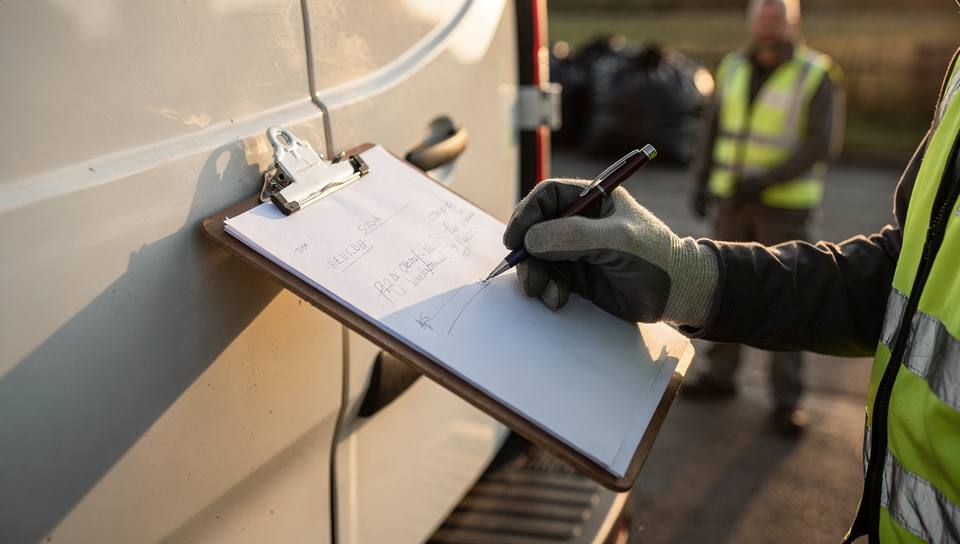
Search the public register for the nation where the company is based: the Environment Agency in England, SEPA in Scotland or Natural Resources Wales in Wales. Enter the registration number or company name, then check that the status is active, the name matches and, for firms that collect other people's waste, that it is upper tier. Keep a dated record.
Key points
- Use the regulator's public register, not just a certificate or a number quoted over the phone.
- A company collecting other people's waste in England or Wales needs upper tier registration.
- England and Wales upper tier registrations last three years, and lower tier does not expire.
- Scotland moved waste carriers to a new authorisation system on 1 November 2025.
Which register should you use?
People often say waste carrier licence, but the official term in Great Britain is registration. Each nation has its own regulator and its own online register, and all three are free to search.
| Nation | Regulator | What to search |
|---|---|---|
| England | Environment Agency | The public register of waste carriers, brokers and dealers on GOV.UK |
| Scotland | SEPA (Scottish Environment Protection Agency) | The SEPA register of waste transporters and brokers |
| Wales | Natural Resources Wales (NRW) | The NRW tool to check a waste carrier, searchable by registration number, name or address |
Use the register for the nation where the company is registered. Businesses based in Wales register with NRW, English businesses with the Environment Agency and Scottish businesses with SEPA. A firm from England can carry waste across the border, so do not be surprised if it appears on a different register from your own.
How to check a waste carrier: step by step
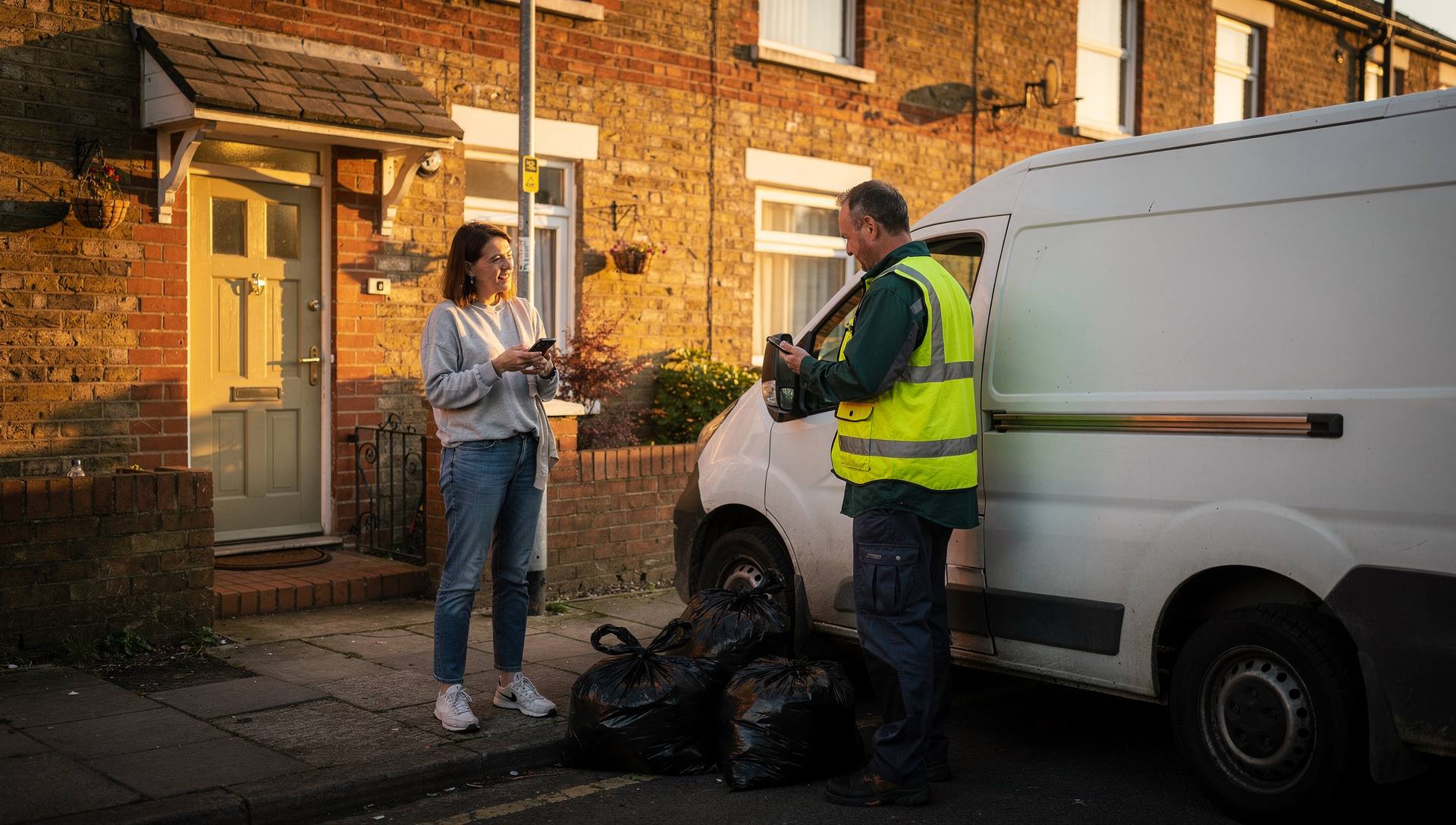
- Ask the company for its registration number and the name it is registered under, before you book. A genuine firm will give you both without fuss.
- Open the correct public register and search by registration number, company name or address.
- Check that the name on the register matches the business you are dealing with, including the trading name on the van or website.
- Check that the status is active and the expiry date has not passed.
- Check the tier. A firm taking away other people's waste should be upper tier.
- Ask to see the certificate or registration letter, and compare the number. Make a note of the date and what you saw.
Keep the screenshot or note with your booking confirmation. Householders do not have to keep written records, but guidance for councils says that checks, receipts or copies of registration can help to show that you took reasonable steps if your waste is ever found fly-tipped. Businesses should keep their checks alongside their waste transfer notes.
What the tiers and expiry dates mean
In England and Wales, there are two tiers of registration. Natural Resources Wales explains that the upper tier applies to carrying waste created by someone else. Its examples include house clearance and scrap collectors taking waste from people's houses. The lower tier covers carrying your own waste that is not construction or demolition waste, such as a gardener taking green waste from a job.
So a skip hire firm, a man and van service or a clearance company working for you should be upper tier. If a company is only lower tier, it may be allowed to carry its own waste but not yours.
- Upper tier in England must be renewed every three years, and the renewal fee on GOV.UK is currently £130.25.
- Upper tier in Wales also lasts three years, and NRW sends a renewal reminder about six weeks before expiry.
- Lower tier registrations in England and Wales do not need renewal, so they have no expiry date to check.
- In England, registration numbers start with CB.
A registration that has just expired is a warning sign, not a small technicality. Ask the company to explain, and do not book until the register shows it is active again.
Checking in Scotland: what changed in 2025
Scotland has changed its system. From 1 November 2025, waste management activities, including transporting waste, are regulated under the Environmental Authorisations (Scotland) Regulations 2018, usually called EASR. Existing waste carrier registrations automatically became EASR registrations on that date.
SEPA's register now lists active authorisations for transporting or brokering waste, plus waste carrier registrations issued under the previous rules. You can filter by authorisation number, holder, trading name or address, and each row shows the status and expiry date. SEPA also says a transporter may keep carrying waste after the expiry date if SEPA received a renewal application by that date, so check the details panel if the date has passed.
If you are comparing providers in Glasgow or Edinburgh, this is the register to use. NetRegs notes that some carriers in Scotland, such as those carrying only farm or quarry waste, are listed as professional collectors and transporters and may provide a letter instead of a standard certificate.
Waste permits, copies of certificates and sites
A carrier registration only covers transport. The site that receives the waste needs its own permit, licence or registered exemption. NetRegs says anyone who recycles, treats, stores or disposes of your waste must hold one, and it is reasonable for a business to ask where its waste will go.
For Wales, NRW runs a separate public register for permits, licences and exemptions. For England and Scotland, the equivalent registers are run by the Environment Agency and SEPA.
If you need a copy of a carrier's certificate, ask the carrier first. Carriers must show evidence of registration when a police officer or authorised officer asks for it, so a genuine firm should be able to produce it. If the carrier cannot, contact the regulator, for example on 03708 506 506 for the Environment Agency, or 0300 065 3000 for NRW.
What to do if the check fails
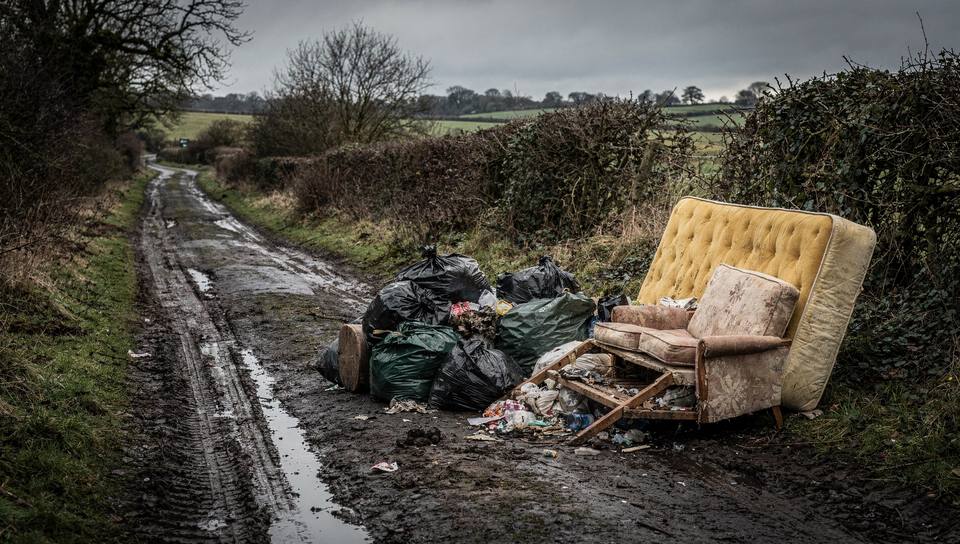
Do not hand over your waste. Carrying waste for profit without being registered is a criminal offence, and if your waste is later fly-tipped, you may be the person the council contacts. Our guide explains whether you can be fined if a company you paid fly-tips your rubbish.
Look instead at registered firms. Our rankings show the Top 5 in each city, for example skip hire in Leeds or house clearance in Cardiff, and the house clearance hub lists every city, and you can also read about what a waste transfer note is and whether you need one.
If you suspect a company is operating illegally, the GOV.UK business waste guidance says you can report it to Crimestoppers.
Quick answers
How to check if a company has a waste carriers licence?
Search the public register for the relevant nation: the Environment Agency in England, SEPA in Scotland or Natural Resources Wales in Wales. Match the name and registration number, confirm the status is active and the expiry date has not passed, and keep a dated record.
How long is a waste carriers licence valid?
In England and Wales, upper tier registration lasts three years and must be renewed. Lower tier registration does not expire. In Scotland, the register shows an expiry date for each authorisation, so check it directly.
How to check a waste permit?
Waste sites need a permit, licence or registered exemption. Use the regulator's public register, such as NRW's permit and exemption register in Wales, or the Environment Agency and SEPA equivalents. Ask the company which site it will use.
How to get a copy of a waste carriers licence?
Ask the carrier for a copy of its registration certificate and compare the number on the public register. If it cannot provide one, contact the regulator, because carriers must show evidence of registration to police or authorised officers on request.
Find a trusted waste firm near you
Our city pages bring together the best skip hire, house, junk, office and garage clearance firms in 11 UK cities. Nobody pays to be listed.
Sources
- GOV.UK: Find a registered waste carrier
- GOV.UK: Register or renew as a waste carrier, broker or dealer (England)
- SEPA: Find waste transporters and brokers (public register)
- Natural Resources Wales: Deciding if you are a waste carrier, broker or dealer
- NetRegs: Who can deal with your waste
- Environment Agency blog: Beware the criminals lurking online
- GOV.UK: Waste duty of care code of practice (November 2018)
Prices and council fees quoted from our city rankings were checked on 3 November 2026. Rules can change, so check with your council or the regulator before you act. This guide is general information, not legal advice.